Freedom, Balance, and the Thinking Horse
Watching horses freely adjust their heads and necks offers a fascinating look at balance, communication, and relaxation while jumping.
Wow! This is awesome to watch.
In this amazing video from the British Bridleless Competition (captured by Calli, a Level 6 qualified Veterinary Physiotherapist and the founder of Vet Physio Phyle, based in Hook, Hampshire), the horses appear totally freeeeeee to carry and adjust their heads and necks as they approach the jumps. They can look ahead, assess the distance, organize their bodies, and maintain their balance with a rider on board.
What stands out to me most is the sense of relaxation between the jumps and during the approach. Rather than being held in a fixed position, each horse has room to use its body in the way it needs at that moment.
As I become more educated and expert in undererstanding animal behavior, I find myself seeing, appreciating, and understanding this kind of horsemanship in a new way. It feels like a direction worth exploring as we continue learning how our riding and training choices affect our horses.
This type of riding requires practice, patience, and awareness. Riders must learn to recognize the horse’s balance and understand how every aid can affect the horse… positively or negatively. It asks us to listen carefully, make thoughtful adjustments, and give the horse enough freedom to participate in the process.
I would love to see more exploration of this approach in the future of horse training here in the United States.
I also believe positive-reinforcement training, or R+, can be an important part of developing this kind of communication. I have ridden my anxious mare in a bitless bridle many times, and I often notice her exhaling more during those rides. That response gives me valuable feedback and encourages me to keep exploring what helps her feel comfortable and able to think.
For me, a relaxed horse is more available to think, respond, and communicate with the rider.
And really, why wouldn’t we want to ride a horse who feels able to do that?
Watch the embedded video and notice how the horses use their heads, necks, and bodies before, between, and over the jumps.
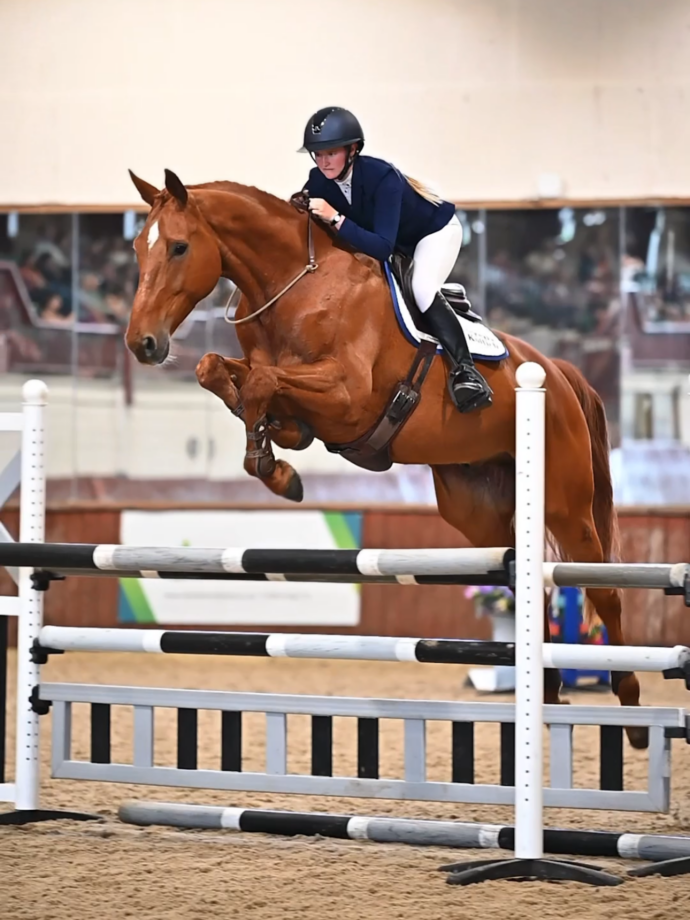
Serena Kullich and Silas VTS Credit: Evelyn Young at Photos Legend via Horse & Hound