Talking to Your Horse: A Positive Step for Dressage
I found this news really interesting and exciting for the sport of dressage.
Personally, I like to chat with my horses. Yes, I am originally from New York City. We talk a lot.
When I ride, I hear myself saying things like “good girl,” “good boy,” “trot on,” “keep trying,” or “relax.” Sometimes it is even “no,” or “hey, don’t make faces at Athena!” (That would be Jackie.) Talking while I ride actually helps me relax and focus more clearly on the communication between us. I do try not to overdo it, because too much talking can become distracting.
As a clicker trainer, I also communicate with a clicking sound to mark a behavior or movement that I like. The click tells the horse, “Yes, that’s it,” and encourages them to offer more of that response. Of course there is more to it than that, but in a nutshell that is the idea. It is part of the fun and part of building a thoughtful conversation with the horse.
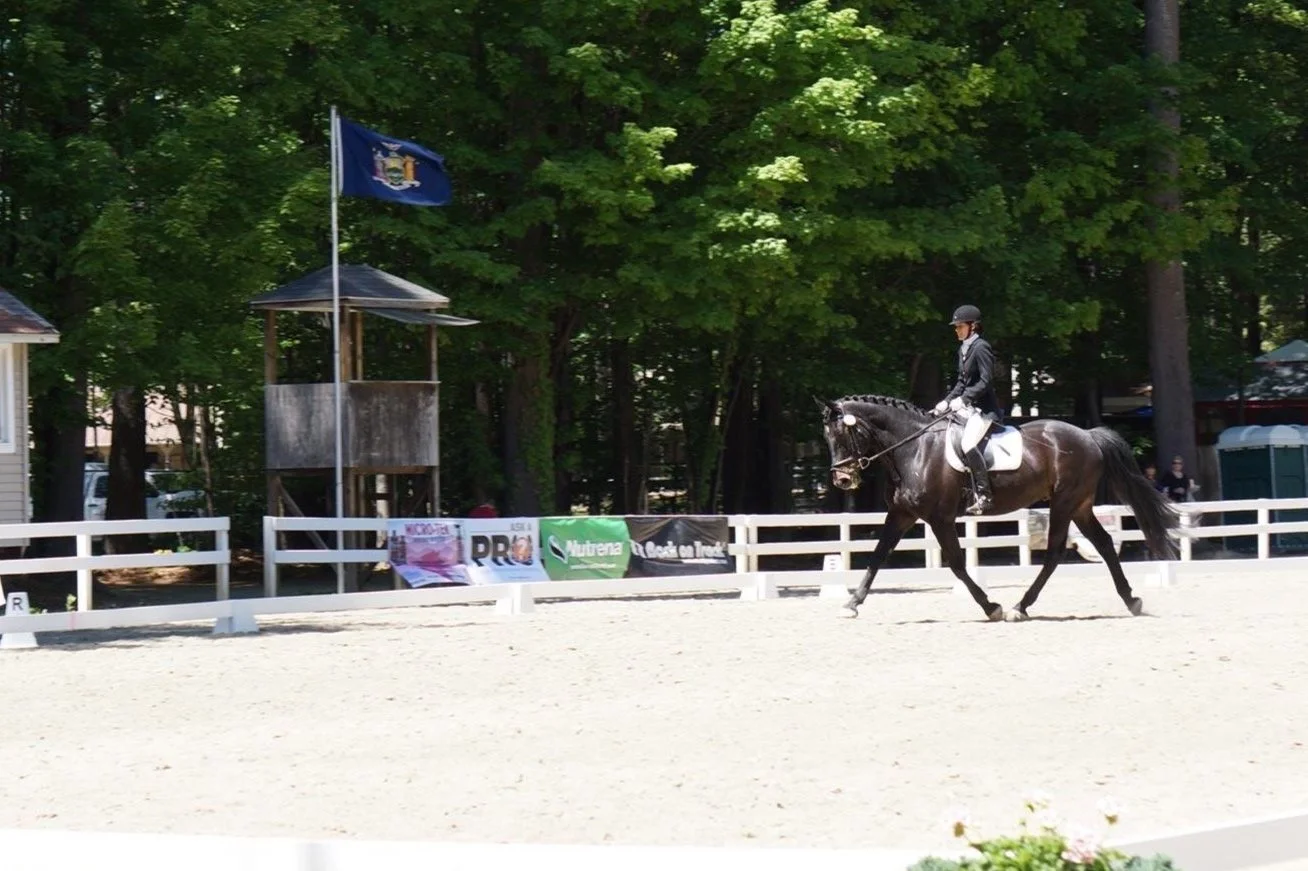
For years I always found it funny that in the show ring everything is so quiet and riders are not allowed to speak to their horses. The first time I showed my big boy Radu, about twenty four years ago, he was five years old and I must have been about twenty seven. It was my first time riding in a dressage show arena.
I remember getting points taken off for talking to him.
I thought, what kind of sport did I get myself into?
I came from the college hunter jumper IHSA world where everyone was cheering for teammates from the sidelines. The dressage ring felt very different, very quiet, and very formal.
So it is interesting to see the sport potentially opening up a little.
Allowing subtle vocal sounds in the show ring could be a positive step for horse welfare and for strengthening the relationship between horse and rider in a competitive setting. If riders use their voices quietly and thoughtfully, it does not have to interrupt the rhythm or the visual picture of the test.
A dressage test is essentially a performance of what you train every day. At the same time, the format can feel rigid. There are traditions in the sport, and those traditions matter. But there are also many ways to communicate with a horse.
Much of our communication is nonverbal. Riders use body language, weight shifts, rein connection, leg aids, and sometimes a crop. These are the subtle, almost invisible cues that create the dance between horse and rider.
So it raises an interesting question.
If so many of our aids are meant to be subtle and invisible, is the voice meant to be invisible too?
This topic came up recently when British Dressage and British Riding Clubs announced that subtle voice aids may now be allowed during competitive tests, including quiet sounds like a click of the tongue. The change reflects growing attention to horse welfare and acknowledges that many horses already respond positively to the sound of their rider’s voice.
If you are curious about the change, you can read more about it in this article from Horse & Hound:
https://www.horseandhound.co.uk/dressage/voice-aids-allowed-dressage-positive-step-910482
It will be interesting to see how the sport continues to evolve while still honoring its traditions.